
Private poker communities have become one of the fastest-growing segments of online poker — not because they invented new rules, but because they solved problems public rooms stopped addressing: regional peak hours, human support, flexible settlement rails and fields filtered by membership rather than anonymous volume.
In 2026, search interest for terms like “ClubGG guide,” “ClubGG membership” and “how do private poker clubs work” reflects a structural shift. Players in the US, Brazil, Germany, Canada, Australia and across the CIS no longer ask only where to play; they ask how the club layer works before sending a first deposit. That question deserves a precise answer — not a recycled affiliate checklist.
This guide explains the full ClubGG club system from platform architecture to tournament logistics, written for newcomers who want to understand mechanics before choosing a ClubGG poker community. We publish from Island Port (Club ID 788000), the Europe-Americas hub of the Union Bro verified network, with cross-links to our poker guides, international private club overview and companion piece on .
Editorial note: Understanding how ClubGG private poker clubs work is prerequisite knowledge for every other ClubGG decision — stakes, bankroll, club selection and legal due diligence. Players who skip this layer treat club poker like PokerStars with a different icon. That mismatch causes most early frustration.
What Is ClubGG?
ClubGG is a poker application built around private clubs rather than a single shared player pool. Where legacy operators open one global lobby and route everyone into the same cash games and tournament lobbies, ClubGG distributes poker through thousands of independent venues — each with its own Club ID, chip economy, schedule and management team — all running on shared client software and certified random number generation.
The platform launched as part of the broader mobile poker wave that accelerated after 2020. ClubGG’s parent ecosystem (NSUS Group, also behind GGNetwork infrastructure) positioned the product for markets where club-style poker — historically home games and invite-only venues — maps more naturally to mobile habits than desktop-first regulated rooms.
Platform overview
At the software level, ClubGG provides:
- A unified client for iOS, Android and Windows (see our mobile poker club guide)
- Club creation and administration tools for operators
- In-club chip accounting, table management and tournament engines
- Anti-collusion and multi-account detection layers
- Union functionality allowing multiple clubs to share liquidity
What ClubGG does not provide is a universal cashier connecting every club to one banking system. Deposits and withdrawals are club-managed — typically through Telegram managers, USDT wallets or regional payment rails. That distinction is the core of how ClubGG private poker clubs work.
Global popularity
ClubGG’s growth tracks three global trends: smartphone-first internet access in LATAM and Southeast Asia, crypto-native settlement for cross-border players, and saturation of reg-heavy micro stakes on public apps. Regional hubs — Asia Poker Club for APAC, Island Port for EU/Americas, Turkey Union Bro for MENA — localize support, schedules and payment methods while sharing union standards through networks like Poker Galaxy Network.
Mobile-first poker ecosystem
More than 70% of active ClubGG sessions originate on mobile devices in verified Western-facing clubs. The app supports multi-tabling on tablet, push notifications for tournament starts, and one-tap rebuys — design choices that favor recreational session lengths (45–90 minutes) over 12-hour desktop grinds.
Recreational and competitive players
ClubGG hosts both ends of the skill spectrum. Micro-stakes cash at NL10–NL25 and $5–$22 MTTs attract casual players; PKO majors, deep-stack series and NL500+ tables serve competitive regulars. The same app feels like a home game or a serious poker room depending entirely on which ClubGG private clubs you join — not on the software badge in the corner.
| Element | Public poker room | ClubGG private club |
|---|---|---|
| Player pool | Global, shared | Club-specific or union-merged |
| Access | Register and deposit | Club ID + manager approval |
| Cashier | Platform-operated | Club manager / USDT / local rails |
| Support | Ticket system | Named Telegram manager |
| Schedule | Platform-wide | Club-defined peaks and overlays |
Understanding the ClubGG Club System
The ClubGG club system is a federation model: one application, many autonomous venues. Think of ClubGG as a shopping mall and each club as an independent store with its own inventory (tables), pricing (rake) and return policy (withdrawals). The mall provides security and plumbing; the store owner controls customer experience.
What Is a Private Club?
A private club on ClubGG is a gated poker venue identified by a numeric Club ID (for example, Island Port uses 788000). You cannot simply open the app and find open seats in every club — you must be invited or approved by that club’s administration.
Private clubs differ from “public” ClubGG discovery listings because access is controlled:
- Membership requests pass through a manager or automated bot flow
- Chip balances exist inside the club ledger, not a global wallet
- Rake, promotions and tournament guarantees are set per club
- Rules on HUDs, multi-accounting and collusion vary by operator policy
Some clubs operate independently with 50–200 members; others sit inside poker unions where multiple Club IDs share tournament lobbies and cash table liquidity. Union membership dramatically changes traffic — a standalone club in Poland at 3 p.m. local time may be empty while a union-merged club runs six NL50 tables.
How Membership Works
ClubGG membership is not one account for all poker — it is a relationship with a specific club. The typical onboarding path:
- Install the ClubGG poker app and create a player account (phone or email).
- Obtain a Club ID from a trusted source — official site, Telegram bot or manager referral.
- Request membership inside the app or via manager message.
- Complete KYC — name, country, ID photo for anti-fraud (standard at verified clubs).
- Receive invitation — usually within 5–15 minutes at active clubs.
- Deposit chips through manager instructions (USDT, SEPA, Pix, etc.).
- Play and cash out through the same club channel.
Detailed steps for Island Port: Join Island Port Club. Bot shortcut: @Unionbrobot with start parameter ggclubport.
You may hold memberships in several clubs simultaneously, but balances do not transfer automatically. Each club maintains separate rake contribution history — relevant for rakeback tiers.
Why Players Join Communities Instead of Public Tables
Players migrate to online poker communities for reasons that compound over time:
- Timezone-aligned traffic. A German player sees tables peak at 20:00–01:00 CET instead of competing with a 24-hour global reg pool.
- Softer average fields. Membership filters and recreational marketing produce higher VPIP at equivalent stakes — often 30–38% at NL50 in active Western clubs vs low-20s on public micros.
- Human accountability. A manager who answers in three minutes changes dispute resolution entirely.
- Flexible banking. USDT TRC-20 settlements in minutes bypass card declines and cross-border friction — covered in our USDT poker club guide.
- Community identity. Telegram channels, leaderboard races and club-branded series create retention loops public rooms replicate poorly.
How ClubGG Cash Games Operate
ClubGG cash games run on the same hand-engine as tournaments but with continuous table logic: players buy in for a stack, leave when they choose, and clubs collect rake per pot according to published rules.
Table formats
Active clubs typically spread:
- NLH 6-max — most common format; faster action, higher rake volume per hour
- NLH 9-max full ring — still present at NL10–NL100 in community-heavy clubs
- PLO 4-card and 5-card — see Omaha poker club guide
- Short deck (6+) — available at higher-traffic union clubs, not every venue
Hold'em mechanics for club players: Texas Hold'em on ClubGG.
Stakes and buy-in ranges
Stakes follow standard blind notation: NL25 means $0.10/$0.25 blinds with typical 100bb buy-ins ($25). Verified international clubs usually spread NL10 through NL500, with NL50 and NL100 carrying the highest concurrent table counts during regional peaks.
Buy-in caps are club-configurable. Most clubs enforce 100bb standard buy-in with 150bb max; deep-stack tables appear during promotional periods.
Player pools
Player pool quality is the single most misunderstood variable. A club’s pool is not “ClubGG players” — it is “members of Club ID X who are online now.” Pool composition shifts by hour, weekday and tournament schedule (many cash regulars play MTTs on Sunday).
Union clubs merge pools across member Club IDs, increasing concurrent opponents without merging chip balances. Island Port shares union liquidity with partner hubs while maintaining independent Club ID 788000 for EU, US, Canadian, LATAM and CIS players — see ClubGG Europe and ClubGG Americas.
Community-based poker environments
Cash games in private clubs behave like repeated local pub games: recognizable screen names, table chat culture, manager-visible disputes. That social layer influences strategy — exploitative play against known recreational opponents differs from anonymous pool maximization. For many newcomers, that familiarity is the product.
| Region | Peak window (local) | Strongest stakes | Common formats |
|---|---|---|---|
| Europe | 19:00–02:00 CET | NL25–NL200 | 6-max NLH, PLO |
| Americas (US/CA) | 19:00–01:00 EST/PST | NL25–NL100 | 6-max NLH |
| LATAM | 20:00–03:00 BRT/ART | NL10–NL50 | 6-max NLH, PLO |
| CIS | 18:00–01:00 MSK | NL25–NL100 | 6-max NLH |
How ClubGG Tournaments Work
ClubGG tournaments use the same registration → blind escalation → payout structure as mainstream online MTTs, but schedules, guarantees and field sizes are club-defined. A club running 60 MTTs daily lives in a different product category than one posting a weekly $50 GTD.
Scheduled tournaments
Clubs publish daily and weekly schedules — often in Telegram before the in-app lobby updates. Scheduled events anchor community rhythm: morning micro grinders, evening majors, weekend series. Island Port publishes 40–80 MTTs daily; full context in poker tournaments at Island Port.
Multi-table tournaments (MTTs)
Standard MTTs register players until late registration closes, merge tables as players bust, and pay top 10–15% depending on structure. ClubGG supports re-entry, rebuy/addon and bounty formats inside the same club lobby.
Freerolls
Freerolls serve as onboarding tools — zero buy-in events with small prize pools or ticket rewards. Quality clubs run freerolls for new members during first week; beware clubs where freerolls are the only active tournament format (traffic red flag).
Leaderboard events
Many ClubGG poker communities run monthly leaderboard races: points for cash rake, MTT cashes or volume tiers. Prizes may be USDT, ticket bundles or rakeback boosts. Leaderboards reinforce retention better than one-off deposit bonuses because they reward continued play across formats.
Community competitions
Club-branded series — weekend majors, holiday PKO storms, cross-club union events — differentiate private communities from generic schedules. Union-wide competitions merge fields from multiple Club IDs, producing five-figure prize pools that standalone micro-clubs cannot sustain.
Tournament tip: Before registering, check late-registration end time, re-entry cap and bounty percentage. ClubGG PKO events with 50% bounty allocation play materially different from standard freezeouts — bankroll and ICM assumptions change from hand one.
| Format | Structure | Typical buy-in range | Best for |
|---|---|---|---|
| Freezeout | Single bullet, no rebuy | $5–$55 | Disciplined beginners |
| Rebuy + addon | Rebuy period, optional addon | $11–$33 | Action seekers, deep stacks |
| Turbo / hyper | Fast blind levels | $5–$22 | Short sessions, high variance |
| PKO / KO | Bounty per elimination | $11–$109 | Aggressive, bounty-aware players |
| Satellite | Win ticket to larger event | $2–$15 | Bankroll-efficient MTT entry |
Benefits of Joining an Active Poker Community
Private club value extends beyond softer tables. An active ClubGG poker community functions as infrastructure for consistent play, learning and social engagement.
Networking
Telegram channels, club Discord groups and table chat create weak-tie networks that matter for staking discussions, study groups and regional live event meetups. Competitive players find study partners; recreational players find regular home-game-style opponents.
Consistent games
Traffic consistency beats peak snapshots. Clubs that run six-plus tables at your stake during your weekday window deliver higher lifetime hourly expectation than clubs showing twenty tables once in a screenshot but empty on Tuesday afternoons.
Player engagement
Engagement mechanics — leaderboard points, ticket drops, holiday promotions — keep recreational players in the ecosystem. For the club operator, engaged recreationals fund rake and overlays; for you, they fund table quality.
Tournament schedules
Published schedules let you plan sessions like a sports league. Grinders block Sunday majors; casual players target $11 evening events. Predictability reduces the “open app, find nothing, close app” churn that kills bankroll discipline.
Community support
Support in verified clubs means a human resolves stuck transactions, explains rakeback tiers and escalates collusion reports — not a 48-hour email ticket. Our Island Port poker community page documents how support and channels integrate with daily play.
Common Misconceptions About ClubGG
Misinformation spreads faster in club poker because many players learn from Telegram forwards rather than primary sources. Four myths dominate.
Legality concerns
ClubGG is software; legality of real-money club poker depends on your jurisdiction. The app operates in many countries; real-money chip settlement between players and managers may fall under local gambling law differently than licensed online poker. This guide is informational only — verify state or national rules before playing. 18+.
Security concerns
“ClubGG is insecure” conflates platform security with club operator trust. The client uses encrypted connections and anti-collusion monitoring; whether your deposit is secure depends on club reputation, documented withdrawal history and named management — not the app store rating alone.
Game fairness
RNG certification covers card distribution; fairness of human play (collusion, chip dumping, bots) is enforced at club level. Verified clubs publish anti-bot policy and investigate flagged hands. Anonymous Club IDs from forums without accountability remain the highest-risk entry point — not the platform category itself.
Player verification myths
Some players believe KYC exists only to steal documents. At legitimate clubs, verification prevents multi-accounting and protects the player pool — the same reason public rooms require identity checks. Refuse KYC at unknown clubs; expect reasonable verification at any club worth long-term membership.
How to Choose a High-Quality Private Poker Club
Club selection is operational due diligence. Use this scorecard before your first deposit — expanded criteria also appear in our .
| Criterion | What to verify | Green flag | Red flag |
|---|---|---|---|
| Traffic | Tables at your stakes during your play hours | 4+ concurrent tables NL25–NL100 at peak | Empty lobby screenshots only |
| Withdrawals | Documented cash-out times | USDT in 2–15 min after approval | Delays over 24h without explanation |
| Support | Response time test before deposit | Manager reply under 10 minutes | Bot-only, no named contact |
| Rakeback | Written tier structure | 25–50% published tiers | “We’ll sort it later” |
| Tournament calendar | Daily schedule in Telegram | 20+ MTTs/day or clear niche focus | One weekly event |
| Anti-fraud | Published bot/HUD policy | Active enforcement, refund policy | No rules posted |
| Network affiliation | Union or verified network membership | Named partners, cross-links | Isolated unknown operator |
| Regional fit | Payment rails for your country | USDT + local method (SEPA, Pix, Wise) | Single obscure payment only |
| Community presence | Active Telegram channel | Daily posts, member interaction | Dead channel, bought members |
| Onboarding clarity | Step-by-step join page | Club ID, bot link, KYC explained | Vague “DM for info” only |
Mistakes New Players Often Make
These errors repeat across every regional hub we monitor. Avoiding them saves more money than any single strategy adjustment.
- Joining the first Club ID found on a forum. Anonymous referrals have no accountability chain. Use official sites, verified bots or manager links from network partners.
- Skipping the withdrawal test. Deposit minimum, play briefly, cash out. Time the process. A club that pays in five minutes on day one earns trust; promises on day zero do not.
- Playing stakes above bankroll. NL100 with a $200 roll is not “learning faster” — it is accelerated bust-out. Start at NL10–NL25 with 25+ buy-ins.
- Ignoring timezone fit. A great Asian club is a terrible European grinder’s home if tables die at 18:00 CET. Match club peak to your calendar.
- Treating rakeback as guaranteed profit. Rakeback offsets cost; it does not create edge. Volume tiers reward regulars, not one weekend warriors.
- Multi-tabling before single-table competence. ClubGG mobile multi-table is convenient; skill leaks multiply across tables. Master one table first.
- Registering for every tournament on the schedule. MTT variance scales with volume. Select events matching bankroll and edge — not every $22 PKO because it “looks soft.”
- Using prohibited tools. RTA, bot software and unauthorized HUD databases trigger bans and confiscation at verified clubs. Read policy before installing anything.
- Expecting public-room instant liquidity at 4 a.m. Club poker is regional. Off-peak hours exist. Plan sessions or accept lower volume.
- Not saving manager contact offline. If Telegram account issues lock you out mid-session, a saved @username and Club ID on paper beats panic searching.
- Chasing losses across clubs. Moving deposit to a “hotter” Club ID after a bad session spreads variance and multiplies KYC friction. Fix stakes and game selection first.
The Future of Private Poker Communities
Club-based poker is not a temporary workaround — it is adapting faster than many regulated rooms to how mobile-native players expect to discover, join and settle poker.
Mobile poker growth
Smartphone penetration in LATAM, Africa and Southeast Asia continues pushing session design toward touch interfaces, shorter formats and notification-driven tournament registration. ClubGG’s architecture aligns with that trajectory; desktop-only competitors face structural headwinds.
Social poker ecosystems
Integration between Telegram, club apps and community leaderboards blurs “poker site” and “poker group chat.” Expect tighter social layers — club-branded content, streamer partnerships, in-channel schedule bots — rather than anonymous lobbies.
International expansion
Union networks formalize cross-border liquidity while keeping regional portals for language, payments and compliance messaging. The UnionBro model — five regional hubs, one operational standard — likely templates how mid-size club groups scale through 2027.
Technology trends
Faster USDT settlement, improved in-app hand history export, AI-assisted collusion detection and optional verified identity badges will separate professional club operations from hobby clubs that stall at 100 members. Players benefit when technology raises the floor on trust — not when marketing outruns infrastructure.
Expert Recommendations for New Players
Practical guidance from operators who onboard international players daily:
- Learn the club layer first. Read this ClubGG guide, then explore one club deeply before sampling five.
- Match club to region. EU/US/CIS players: Island Port (788000). APAC: Asia Poker Club. Turkey/MENA: Turkey Union Bro. CIS Russian-first: UnionBro.
- Start micro, prove cash-out, then scale. First week = NL10–NL25 and $5–$11 MTTs only.
- Ask for the weekly schedule in Telegram. Screenshot it. Plan three sessions against known events.
- Track rake and rakeback manually for month one. Verify published tiers match actual payments before increasing volume.
- Use official download links only. iOS App Store, Google Play, ClubGG Windows installer — never sideloaded APKs from random channels.
- Play responsibly. Set session loss limits. Club poker’s social warmth makes chasing losses psychologically easier — treat limits as non-negotiable. 18+.
Island Port onboarding: Install ClubGG → search Club ID 788000 → message @Unionbrobot or @unionbropoker → complete KYC → deposit → play. Average time: 5–10 minutes. Full walkthrough: Join Island Port Club.
Frequently Asked Questions
What is ClubGG?
ClubGG is a mobile-first poker application that hosts private clubs rather than one open global lobby. Players install the app on iOS, Android or Windows, then join individual clubs via Club ID and manager approval. Each club runs its own tables, tournaments, rake rules and membership policies inside the shared ClubGG software layer.
How do ClubGG clubs work?
A ClubGG club is a gated poker venue identified by a numeric Club ID. After membership approval, you deposit chips through the club manager, play cash games or register for tournaments within that club, and cash out through the same manager or payment rail. Clubs may operate standalone or inside a union that shares liquidity across multiple Club IDs.
Can beginners join private clubs?
Yes. Most verified ClubGG private clubs accept beginners who complete a short onboarding and KYC check. Micro-stakes NL10–NL25 tables and low-buy-in MTTs are designed for recreational players. Beginners should start at stakes where a 20–30 buy-in bankroll covers variance and ask managers about freerolls or welcome overlays.
Are ClubGG tournaments competitive?
Competition varies by buy-in and time zone. Micro and low-stakes MTTs often contain softer recreational fields; mid-stakes PKO and nightly majors attract regulars and semi-pros. Tournament difficulty depends on club size, guarantee structure and whether the event pulls union-wide liquidity.
How do poker communities grow?
Private poker communities grow through referral networks, Telegram channels, consistent tournament schedules, fast withdrawals and union partnerships that merge player pools. Retention matters more than acquisition: clubs that answer support in minutes and run tables during regional peak hours compound membership organically.
What makes a good poker club?
A good ClubGG poker club combines visible traffic at your stakes, documented withdrawal times, responsive manager support, published rakeback tiers, anti-bot enforcement and a tournament calendar aligned with your timezone. Transparency before deposit — not marketing claims — is the primary signal.
Are private poker communities safe?
Safety depends on club operator reputation, not the app brand alone. Verified clubs with public Telegram channels, named managers, anti-collusion monitoring and track records of timely USDT payouts are materially safer than anonymous Club IDs shared on forums. Players should verify local law and never deposit more than they can afford to lose. 18+.
How do ClubGG memberships work?
Membership is club-specific. You request access via manager or bot, pass identity verification for anti-fraud, receive an invitation tied to your ClubGG account, and maintain a chip balance inside that club. You can hold memberships in multiple clubs but each has separate balance, rake history and withdrawal channel.
What games are available on ClubGG?
Active ClubGG clubs typically offer No-Limit Hold'em (6-max and full ring), Pot-Limit Omaha, short-deck variants at higher-traffic clubs, plus MTT formats including freezeout, rebuy, turbo, PKO and satellite structures. Game availability is club-dependent — check the lobby after joining rather than assuming every format runs 24/7.
What should new players know before joining?
New players should confirm legal status in their jurisdiction, test withdrawal speed with a small deposit first, match stakes to bankroll, verify peak traffic in their timezone, read rakeback terms in writing, and save manager contact before playing. Treat club poker as community membership, not anonymous click-and-play — your manager is part of the product.
Conclusion
How ClubGG private poker clubs work comes down to a simple model: one app, many gated venues, club-managed money flow and community-defined schedules. The platform supplies software and security; each ClubGG poker community supplies traffic, trust and support.
New players who understand the ClubGG club system before depositing — membership paths, cash game pools, tournament calendars, withdrawal mechanics — make better club choices and avoid the forum-referral traps that dominate beginner horror stories.
Private poker is growing because it fits how mobile players actually live: regional peaks, Telegram-native support, crypto settlement and recognizable opponents. Whether you join Island Port or another verified hub, run the checklist, test a cash-out, and play responsibly within your bankroll and local law.
Next steps: Join Island Port · Browse all guides · Telegram bot · Club ID 788000
ClubGG guides across the Union Bro network
Related pillar content from verified partner portals — cross-linked for discovery.
Verified Union Bro network clubs
Each portal is optimized for its region. All clubs share Union Bro operational standards and cross-discovery.
 UnionBro
ClubGG · X-Poker · PPPoker — CIS & worldwide
Club ID · Multi-platform
UnionBro
ClubGG · X-Poker · PPPoker — CIS & worldwide
Club ID · Multi-platform
 Poker Galaxy Network
Global union for verified private clubs
Club ID · Union network
Poker Galaxy Network
Global union for verified private clubs
Club ID · Union network
 Asia Poker Club
Southeast Asia · Korea · Japan · Vietnam
Club ID · 408340
Asia Poker Club
Southeast Asia · Korea · Japan · Vietnam
Club ID · 408340
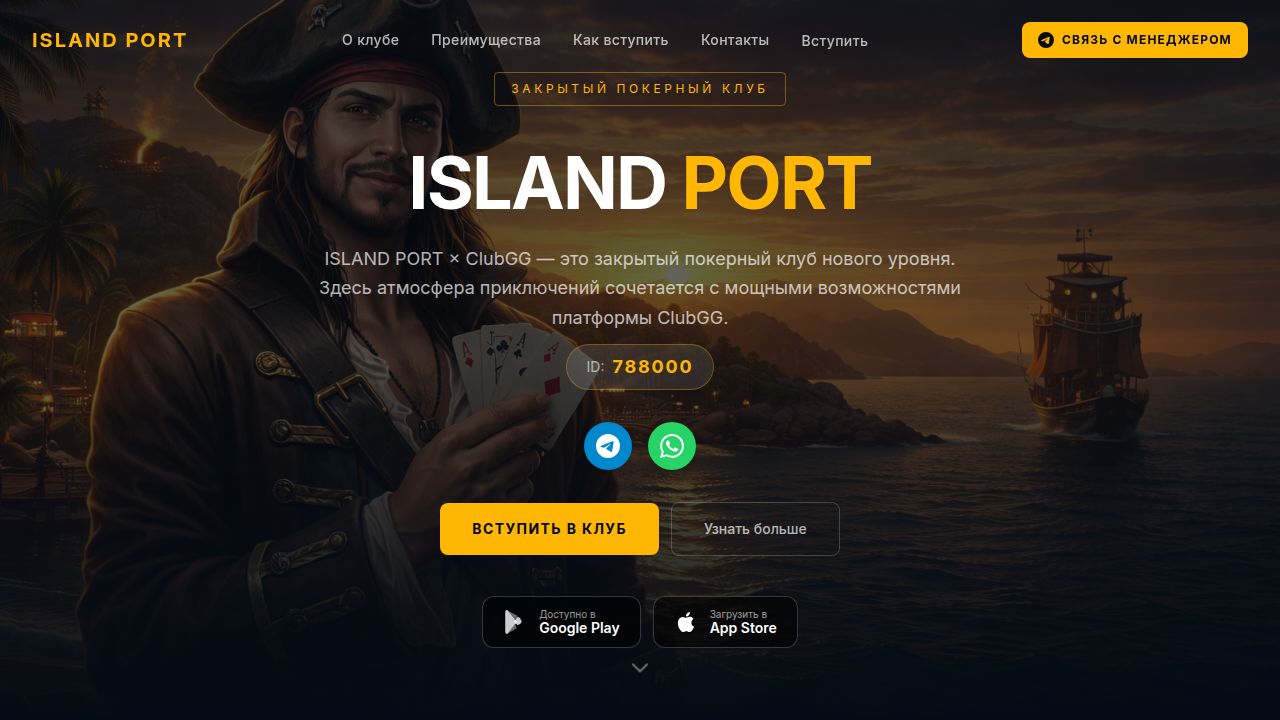 Island Port
Europe · Americas · CIS
Club ID · 788000
Island Port
Europe · Americas · CIS
Club ID · 788000
 Turkey Union Bro
Turkey ClubGG private club
Club ID · 408340
Turkey Union Bro
Turkey ClubGG private club
Club ID · 408340
Download ClubGG
Install the official ClubGG app, then connect via Telegram.